
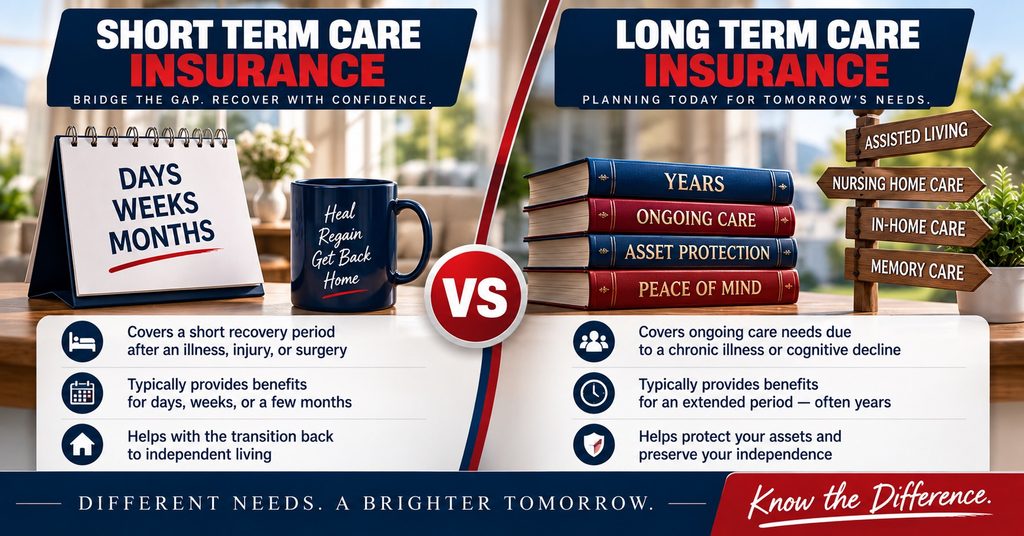
Short-term nursing home and home health care insurance offers great protection in retirement. Planning for the future often comes with a significant roadblock: the staggering cost of extended medical care. If you have looked into traditional long term care policies lately, you may have found yourself dealing with sticker shock. Also the strict health qualifications or confusing waiting periods may have left a bad taste in your mouth.
If you are worried that you waited too long to apply, or if a carrier denied your application due to a minor health condition, you are not out of options. For many, Short Term Nursing Home and Health Care Insurance is the exact safety net needed to protect retirement savings without the massive monthly price tag.
Here is exactly how this coverage works, why industry experts call it a highly effective “band-aid,” and how it can bridge the gaps left by Medicare.
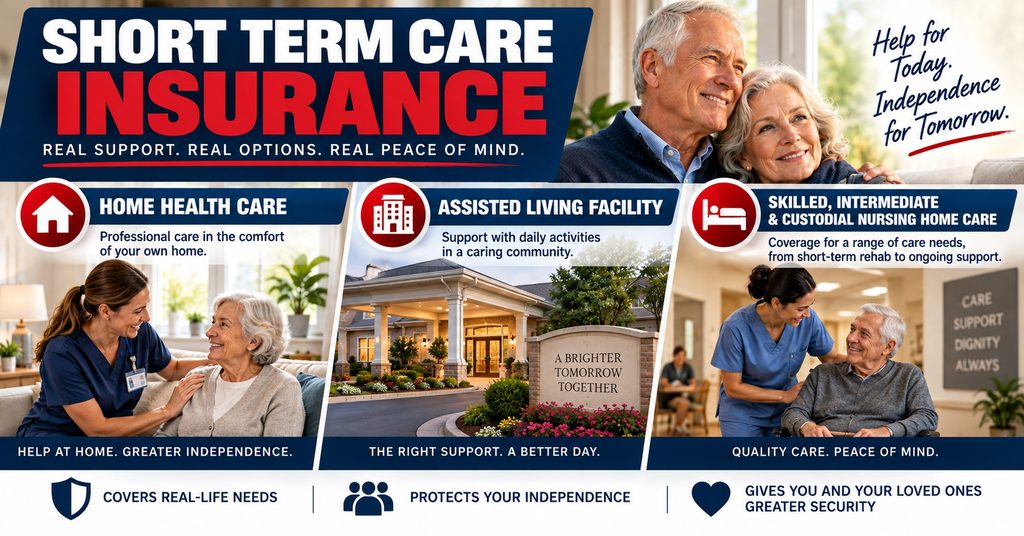
Often referred to as recovery care, short-term care insurance is a policy designed to provide immediate, temporary financial protection when you need assistance with daily living activities.
While traditional policies aim to cover years of care, short-term care typically provides coverage for up to one year. According to financial experts and data from platforms like SmartAsset and ElderLife Financial, this coverage acts as a critical bridge. Whether you are recovering from an unexpected surgery, a sudden illness, or a fall, these policies help pay for:
When reviewing the structure of these policies, financial advisors often point out a unique benefit: the coverage does not have to be consecutive. For example, a policy might cover one full year of home health care, and later, if your health deteriorates, cover an additional year in a nursing facility. It provides the exact level of care you need, exactly when you need it.
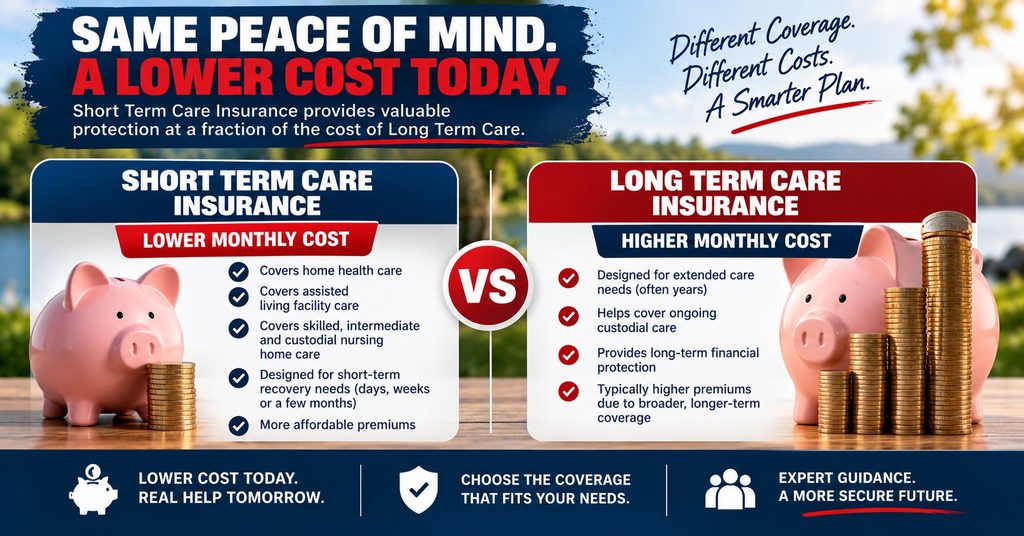
If you are looking for a lower cost alternative to long term care insurance, short-term insurance policies for seniors offer incredible financial leverage.
Data from the American Association for Long-Term Care Insurance (AALTCI) reveals a surprising statistic: almost half (49%) of all extended care claims last for one year or less. This means that many seniors are paying sky-high premiums for years of traditional coverage they may never actually use. Short-term policies align perfectly with this statistical reality, allowing you to pay only for the timeframe you are most likely to need.
Additionally, short-term care pricing structures offer distinct advantages:
Short term care insurance for seniors offers a simpler path to qualifying and faster activation when you actually need it. The two biggest hurdles in senior healthcare planning are:
Short term care insurance for seniors solves both problems effortlessly.
Simplified Underwriting Traditional policies often require exhaustive medical records, physician statements, and physical exams. In contrast, short-term applications are dramatically simpler. Most applications only feature 7 to 10 basic “yes or no” health questions. If your health conditions are stable and managed, qualifying is significantly easier, even in your 70s or 80s.
The Zero-Day Elimination Period
Perhaps the greatest advantage of short-term care is the elimination period (the waiting period before the policy pays out). Traditional policies usually force you to pay out-of-pocket for the first 90 days of care. If you suddenly need a home health aide, paying out-of-pocket for three months can easily drain your savings.
Most short-term care policies offer a zero-day elimination period for home care. This means if a sudden health event occurs, your benefits kick in on day one. For single individuals who do not have adult children living nearby to provide immediate physical support, this day-one coverage provides ultimate peace of mind.
When comparing short term care insurance to traditional long term care insurance, the differences in cost, qualification requirements, and waiting periods become immediately clear.
| Feature | Short-Term Care | Traditional Long-Term Care Insurance |
| Maximum Duration | Typically 360 days or less | Several years up to Lifetime |
| Waiting Period (elimination period) | Usually 0 day or 20 days | Popular options are 0, 30, or 90 days |
| Qualification (underwriting) | Easier medical questions | Full Medical Underwriting (tougher) |
| Average Premium | Typically $70 – $190 monthly | $250 – $500 monthly |
State availability for short term care insurance varies across the country because each state regulates these policies individually.
These plans are available and approved in the vast majority of states—including Maryland, Pennsylvania, Virginia and West Virginia. However, they are typically not available for residents in Massachusetts, Florida, New Jersey, New York, Rhode Island, and California.
Short-term care is essentially a financial “band-aid,” but it is an incredibly effective one. It will not cover a five-year stay in a nursing facility, but for the vast majority of seniors, it provides the immediate, day-one financial support necessary to recover safely and comfortably without draining a lifetime of savings.
At Senior Benefit Services, Inc., we help you cut through the confusion to find the exact coverage that fits your life and your budget. With regional offices in Hagerstown, Thurmont, and Cumberland, our advisors run real-time rate comparisons so you do not have to guess which policy works best for you. Call us today at (800) 924-4727 to secure your peace of mind.
Short-term care insurance provides temporary financial coverage for medical and non-medical extended care needs, typically lasting up to one year. It helps cover out-of-pocket costs such as in-home health care aides, assisted living facility rent, rehabilitation, and skilled nursing facility stays.
Yes, it is generally a much more affordable option. Because these policies typically provide up to 360 days of coverage, the insurance company has a predictable maximum payout. This limited exposure allows carriers to offer much lower monthly premiums.
Unlike traditional long-term care policies, which often require a 90- to 180-day waiting period before benefits begin, many short-term care plans offer a zero-day elimination period for home health care. This means your benefits begin the very first day you need in-home assistance.
No, short-term care plans are typically much easier to apply and qualify for than traditional long-term care insurance. The medical underwriting process is simpler, often requiring just a brief series of “yes or no” medical questions. This makes it a strong option for seniors who cannot afford traditional coverage or whose prior applications a carrier declined.
Yes. While Medicare Parts A and B cover some inpatient skilled nursing facility care and limited home health services, they do not cover extended custodial care. Short-term care insurance helps cover these financial gaps, ensuring you have funds available if an unexpected illness, injury, or surgery limits your daily living activities.

Hours :

Hours :
Hours :